
Grant Management for Small Nonprofits: A Practical Guide
This guide is for the person at a small nonprofit who handles grants alongside three other jobs: the executive director who writes proposals at night, the program manager who inherited the funder list, the part-time grants coordinator with more deadlines than hours. The problems tend to be the same. The shortlist holds more funders than anyone can write for. The board hears a pipeline total that will never arrive. The budget gets finished the night before the deadline, and the award, once it lands, disappears into the general bank balance.
Each of those problems has a working method behind it. None needs special software, only a few rules applied the same way every time. The sections below walk through the grant cycle in order, from choosing which funders to approach to closing out an award.
Screen funders before anyone writes
The most expensive mistake in grant work is spending writing time on a bid that was never going to qualify. The fix is to treat eligibility as a gate, not as one factor among many. A warm relationship with a program officer cannot outweigh a failed eligibility test, so anything that fails is screened out before it reaches the writing queue.
After the gate, score what remains. A useful scoring model looks at five things: strategic match (does the funder want what you do), funding match (does the grant size fit the work), eligibility detail, competition and relationship. Then do the step most teams skip: estimate the bid hours for each opportunity, add them up, and compare the total with the writing hours your team actually has in the period.
Here is how that plays out in the sample file of the Funder Prospect Research System. Before scoring, 45 opportunities are logged across 40 funders. After scoring, the verdicts are 8 GO, 23 CONDITIONAL GO, 4 HOLD and 10 NO GO, so 22% are screened out before any bid time is spent. Even then, the top 20 opportunities need 1,658 hours against a capacity of 600. Those are illustrative figures, but the shape is common: the remaining list still holds far more work than the team can do, and the useful output is knowing where the cut-off falls.
Three mistakes show up again and again. The first is keeping every promising funder “just in case.” The fix is to write down the one condition that would move a HOLD to GO, and take the funder off the active list until that condition is met. The second is weighting relationship so heavily that it rescues ineligible bids, which the eligibility gate prevents. The third is counting deadlines instead of hours. A calendar full of due dates says nothing about whether the work fits, so put an hours estimate on every live opportunity.
Forecast with a weighted pipeline
Boards often hear the total of every open request. That is the one figure a grants manager knows will not arrive in full. A weighted pipeline gives a more honest number: multiply each open request by its chance of being funded, then add the results. Awarded grants count at 100% and declined ones at zero.
| Request (illustrative) | Amount | Chance of funding | Weighted value |
|---|---|---|---|
| New project request | 50,000 | 30% | 15,000 |
| Renewal | 20,000 | 80% | 16,000 |
| Awarded grant | any | 100% | full amount |
| Declined request | any | 0% | 0 |
The probabilities are judgment calls, so record how you set them. A renewal with a funder who has paid you for three years deserves a different number from a cold application to a national foundation. Revisit each probability after every decision comes back, so the forecast learns from your actual win rate rather than from optimism.
Show a conservative and an optimistic scenario next to the expected one. The width of that range tells the board more than any single total. In the sample data of Grant Tracker Pro, a pipeline of 3,766,175 becomes an expected 1,358,909 once each request is weighted. A gap that large between the headline and the weighted figure is exactly why the weighted number belongs in board papers.
Build the proposal in the right order
Writing the executive summary first feels efficient. The trouble is that the summary is often the part reviewers read most closely, and if it is written before the project is designed, the body drifts away from what it promised. A sounder build order works from logic to narrative, with each step testing the one before:
- Theory of change: what needs to change, and why your approach should cause it.
- Logframe: goal, outcomes, outputs and the assumptions linking them.
- Indicators: how you will know each level was reached.
- Activities and schedule: what happens, when, and who does it.
- Budget, built from the activities.
- MEAL plan: monitoring, evaluation, accountability and learning.
- Narrative sections.
- Executive summary, last.
If a budget line cannot be tied to an activity, it is not ready to be in the budget. If an indicator has no activity producing it, the logframe has a hole. Working in this order exposes those gaps while there is still time to fix them.
Before step one, run a fit test. The AI Grant Writing Playbook uses six questions, and two or more “no” answers mean you decline the opportunity. Declining early is a decision, not a failure, and it protects writing hours for bids that fit.
If you use AI tools to draft, three rules keep the proposal safe: every number traces to a source, no generated beneficiaries, quotes or photos, and no beneficiary data goes into any AI tool. Before submission, someone who did not write the proposal should read it as a hostile reviewer would.
Make the budget traceable
Budget errors rarely look wrong in a finished spreadsheet. The requested amount does not match the budget total. Indirect costs are applied to a base that already contains shared costs charged as direct lines, so those costs are counted twice. Match funding is allocated beyond what a partner has committed in writing. A unit rate appears that nobody can source.
A simple test catches most of these. Every line should answer three questions: which activity does it pay for, what assumption sets the amount, and where does that number come from. For indirect costs, write down the rate, its source, and exactly which cost categories sit in the base. If the funder caps indirect costs and you cannot find the rule in their guidance, mark it as unknown and ask, instead of guessing.
The Grant Budget Template applies this test line by line. In its fictional worked example, indirect cost is 10% of a 236,756 base, 22 of 25 integrity checks pass, and the result is REVISE with the reasons listed. That outcome is the point of a check: three specific problems found before the funder finds them.
Common mistakes and fixes: rounding unit rates until totals no longer reconcile (fix: round only the final display); copying last year’s salaries without the raise (fix: date every assumption); and listing in-kind match as cash (fix: keep in-kind in its own column with its valuation method).
Review the draft before you submit
Many teams read a strong internal review score as permission to submit, even when one mandatory item is still missing. An average across criteria cannot tell you whether a proposal is ready, because some requirements are pass or fail. Eligibility, mandatory attachments, and a safeguarding policy for work with children cannot be offset by good writing.
A sounder review sorts the funder’s rules into three groups: mandatory, scored and informational. Check the mandatory items first. Only when they all pass do you score the rest. Watch one arithmetic trap: a criterion nobody has scored yet should be left blank, not counted as zero, or it drags the average down and hides real weaknesses elsewhere.
The worked example inside the Grant Proposal Scoring Matrix shows why the order matters. The draft scores 76.7 out of 100, inside the MINOR REVISION band, yet the overall status reads HOLD because eight issues are unresolved, one of them a missing safeguarding policy. A confirmed No on any mandatory check returns DO NOT SUBMIT, whatever the score. When several reviewers score, large differences between them are worth discussing, and an action marked closed without evidence should still count as open.
Manage the award after it lands
An award letter is not cash in the bank. Two habits keep restricted grant money visible after the celebration. First, tag every transaction with a fund, so restricted, designated and unrestricted money stay apart. Second, record what the funder has actually paid separately from what they awarded.
The fictional pantry in the Nonprofit Treasurer Spreadsheet example shows the difference. Its Youth Mentoring Grant has received 6,000 of a 12,000 award and spent 3,200, leaving 2,800 restricted. Without fund tags, that 2,800 would be invisible inside the general balance, and the treasurer would only discover the true position when the report came due. Put each reporting deadline on a calendar with a warning window, 30 days is a sensible default, so reports are drafted from current figures rather than reconstructed.
Plan the end of the grant early too. Equipment bought with grant money usually comes with conditions in the award: who owns it at the end, whether it can move to another project, and whether disposal needs the funder’s approval. List every asset the grant paid for, read the terms, confirm location and condition with a physical check, decide each item’s next use, then record the approval. The Asset Management System flags donor-funded assets inside a window you set before the project ends, so closeout is routine work instead of a scramble in the final two weeks.
Tools that help
- Funder Prospect Research System: scores each opportunity out of 100 and applies seven rules in order to return GO, CONDITIONAL GO, HOLD or NO GO with a reason and a next action.
- Grant Tracker Pro: scores opportunities for a 0 to 100 priority and forecasts the pipeline in three scenarios across eight quarters.
- AI Grant Writing Playbook: a PDF built around the proposal build order, with a six-question fit test, a seven-step AI workflow and three worksheets.
- Grant Budget Template: traces every line to an activity and an assumption, runs 25 integrity checks and reconciles the request with the budget.
- Grant Proposal Scoring Matrix: checks mandatory items before scoring, supports up to 8 reviewers with variance flags, and returns DO NOT SUBMIT on any confirmed mandatory failure.
- Nonprofit Treasurer Spreadsheet: tracks restricted funds against the reconciled book balance and links money received to actual deposits.
- Asset Management System: flags donor-funded assets before a project ends and keeps disposals blocked until terms and approvals are checked.
Where to start
Grant management at a small nonprofit comes down to a handful of disciplines: gate on eligibility, weight the pipeline, build proposals from logic to narrative, make every budget line traceable, review mandatory items before scores, and keep awarded money tagged until the final report. None of them guarantees a funding decision, which always belongs to the funder. They do make sure the time you spend goes to bids that fit, and that every number you send can be explained.
Tools mentioned in this guide
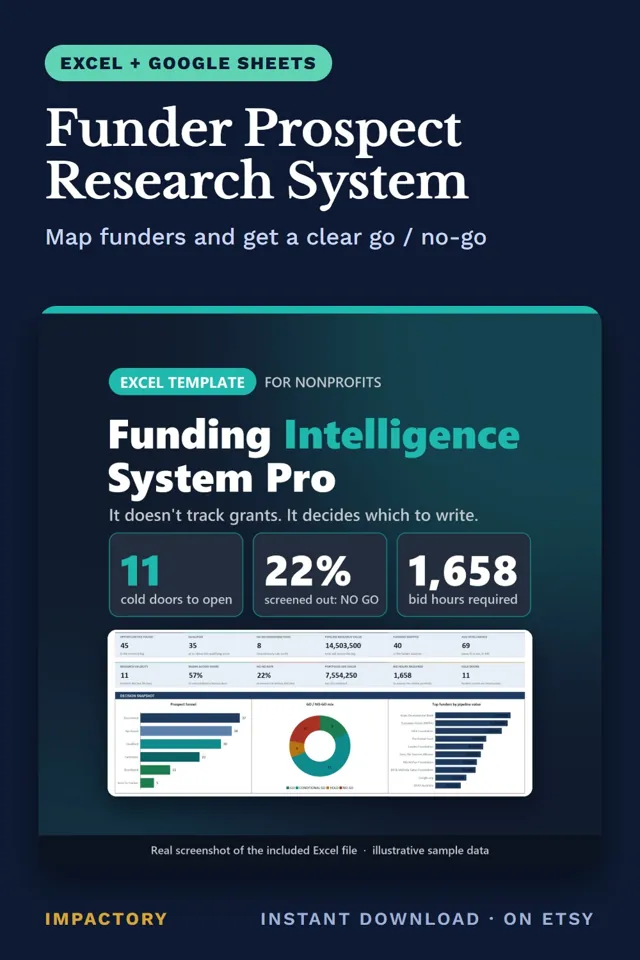
Funder Prospect Research System
Excel + Google SheetsShortlists that keep every promising funder end up with more bids than the team has hours to write, and the best ones get rushed.
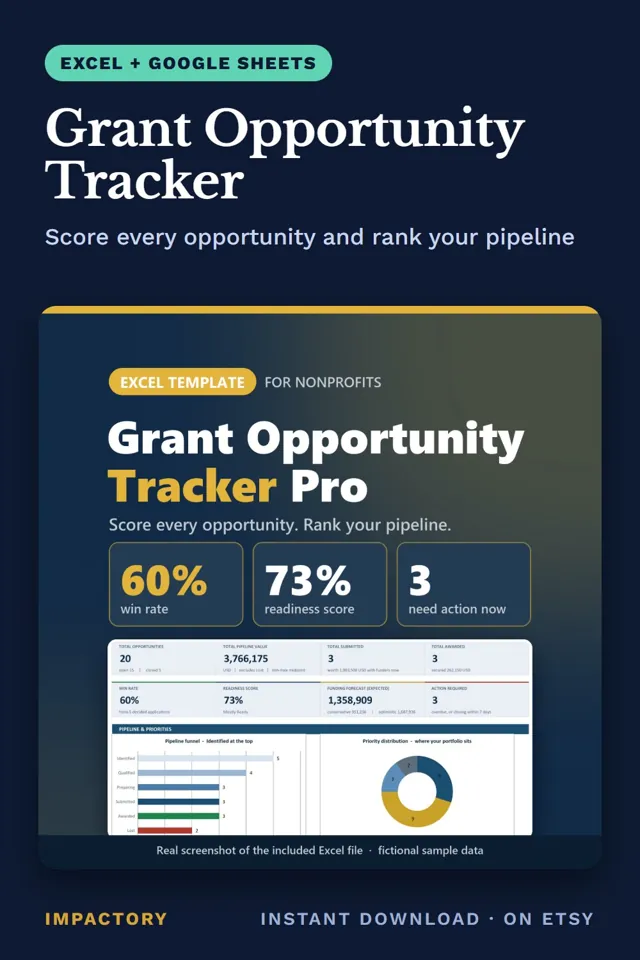
Grant Opportunity Tracker
Excel + Google SheetsBoards often hear the total of every grant in the pipeline, which is the one figure a grants manager knows won't arrive.
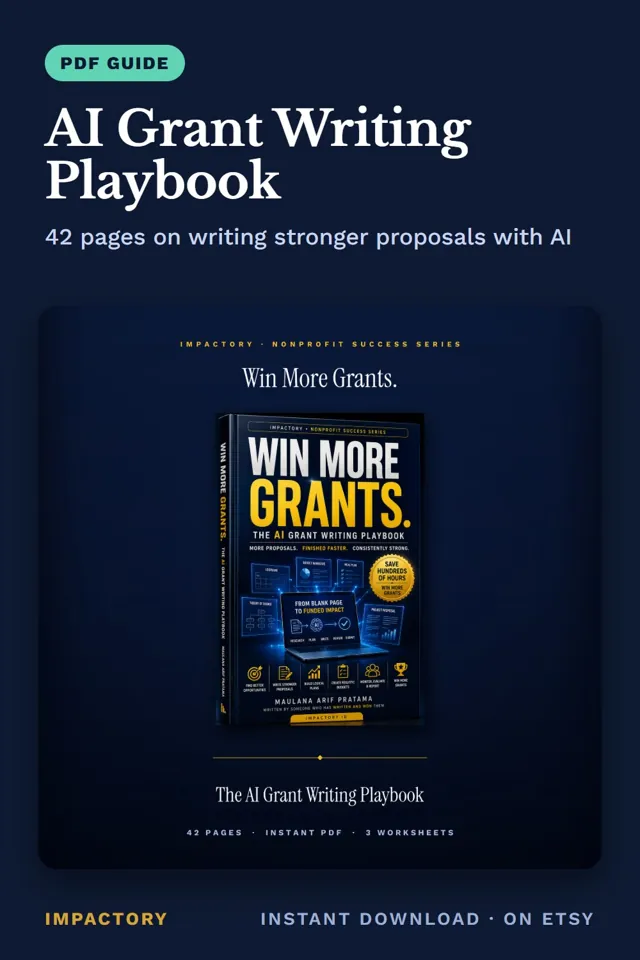
AI Grant Writing Playbook
PDF guideWriting the executive summary first feels efficient, until the proposal body drifts away from what the summary promised.
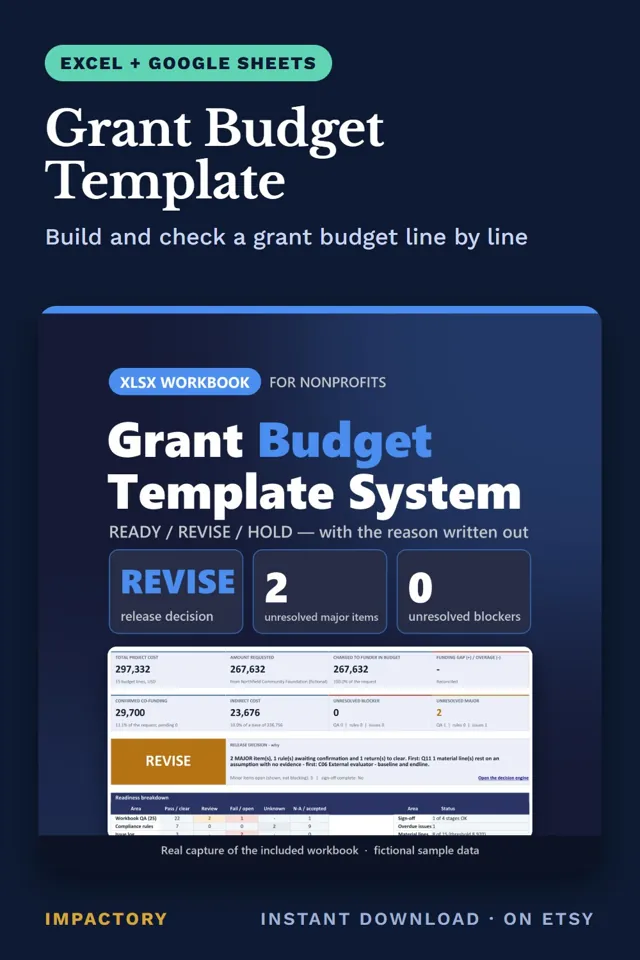
Grant Budget Template
Excel + Google SheetsGrant writers finishing the budget the night before a deadline rarely have time to trace where each unit rate came from.
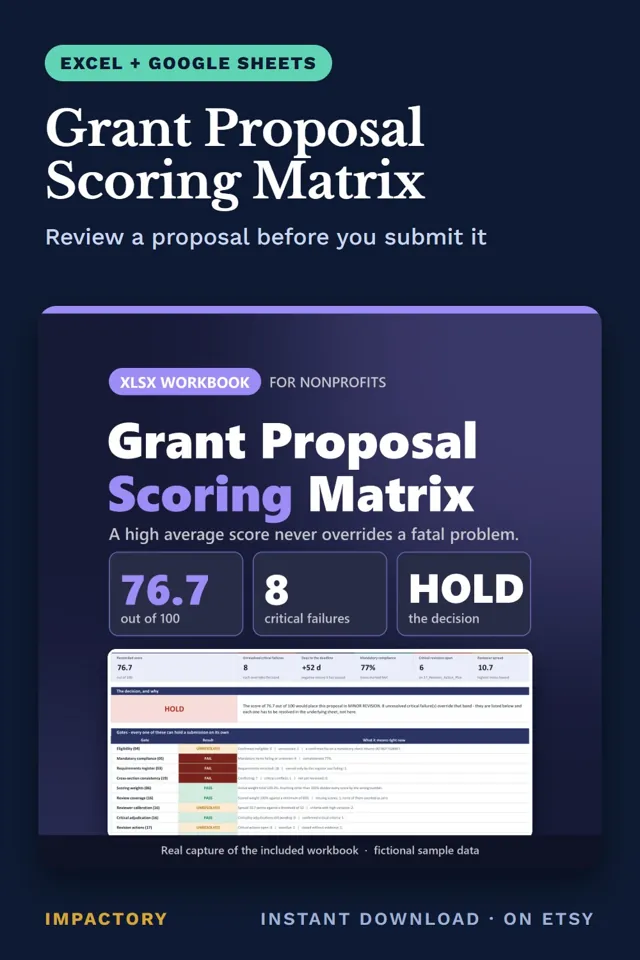
Grant Proposal Scoring Matrix
Excel + Google SheetsMany grant teams read a strong internal review score as permission to submit, even when one mandatory item is still missing.
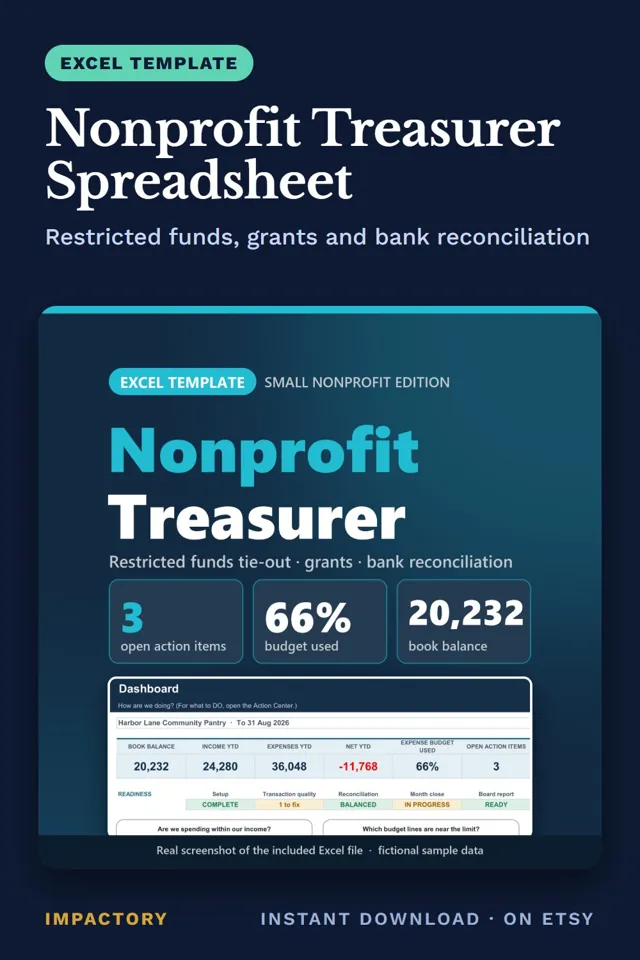
Nonprofit Treasurer Spreadsheet
Excel + Google SheetsTreasurers who keep grant money in one general balance often can't say how much of a restricted grant is left until the report is due.
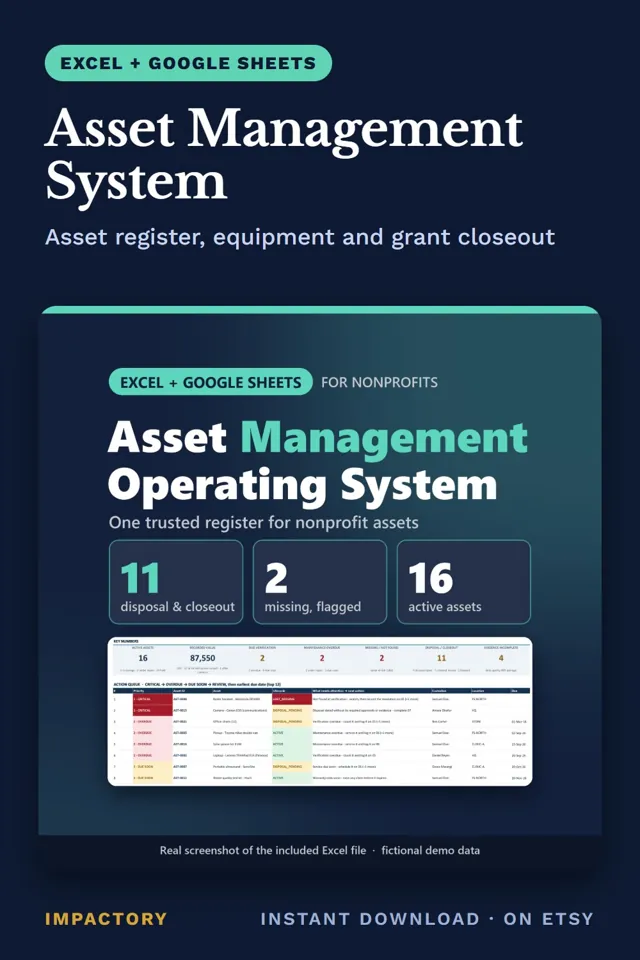
Asset Management System
Excel + Google SheetsIf a grant ends on 31 December, the laptops, vehicles and generators it paid for need a decision in the next two weeks.